Who it's for
SettlementIQ™ is built for energy managers, finance teams and power producers responsible for verifying complex electricity billing and market settlements.
- Energy Manager
- Energy Procurement
- Energy Trader


SettlementIQ™ is Rodan’s settlement validation platform designed to verify electricity billing and market revenue across complex energy programs. It simulates utility invoices using interval meter data so your team can identify discrepancies before settlement disputes occur.
SettlementIQ™ is built for energy managers, finance teams and power producers responsible for verifying complex electricity billing and market settlements.
You get daily shadow invoicing, automated discrepancy detection and stronger validation of energy settlement outcomes.
Portfolio metrics are aggregated. Results vary by site.
SettlementIQ™ gives your finance and energy teams earlier visibility into billing drivers and settlement outcomes. Instead of discovering issues at month-end, discrepancies are flagged continuously so your team can resolve them before they compound.
Simulate electricity bills daily using interval meter data to reveal cost drivers earlier.
Identify billing inconsistencies before they escalate into disputes or revenue leakage.
Verify electricity invoices against expected consumption and program rules.
Track electricity usage patterns that influence billing outcomes.
Detect issues early so they can be corrected before settlement deadlines.
Ensure demand response and market program revenue is accurately captured.
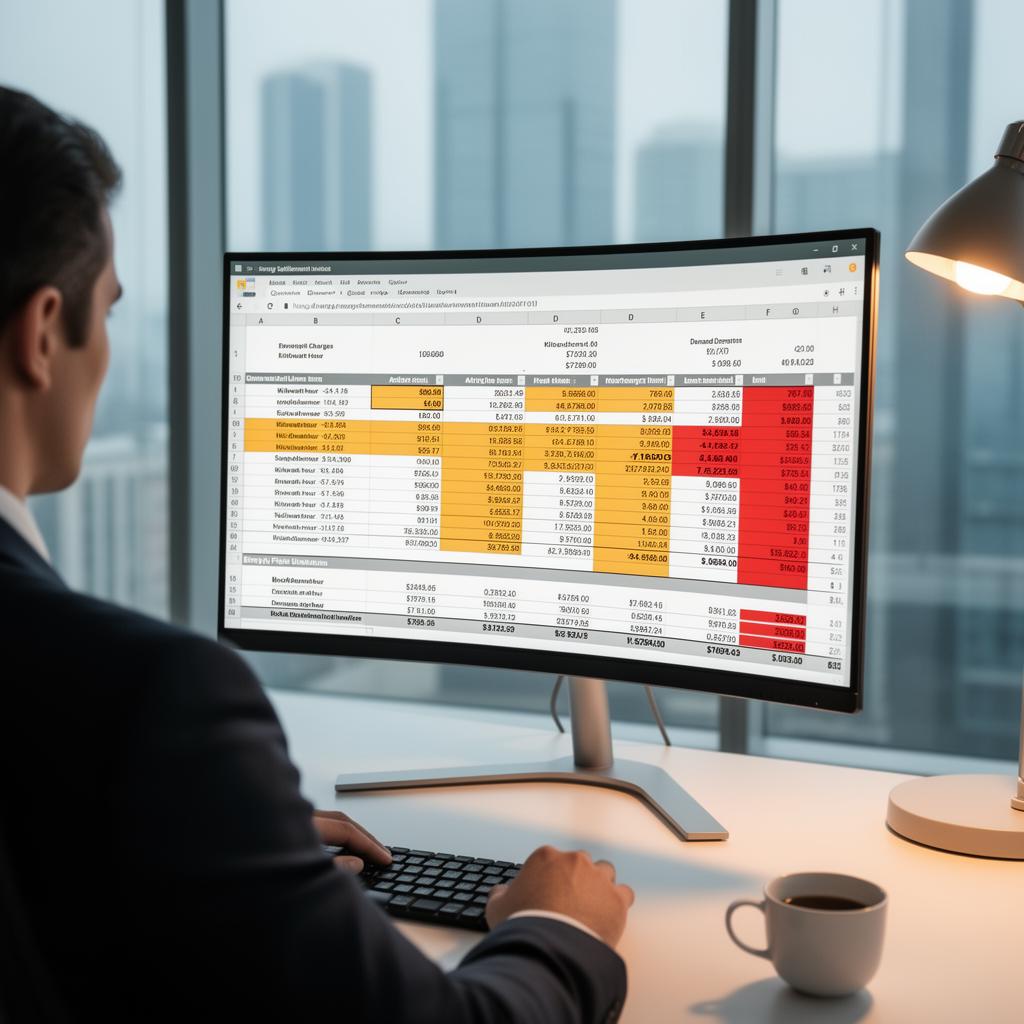
Identify unexpected charges before they appear on official electricity invoices.
See how energy consumption patterns influence settlement outcomes.
Ensure participation in energy programs translates into accurate payments.
SettlementIQ™ helps energy and finance teams move from reactive invoice review to proactive settlement monitoring. By validating billing data earlier, organizations reduce dispute cycles and gain greater confidence in their electricity costs.
See the full picture
Make confident decisions
Whether you manage energy costs, validate invoices or oversee market settlements, SettlementIQ™ gives your team earlier visibility into billing outcomes.
Track electricity costs across facilities and identify billing discrepancies before month-end.
Monitor electricity cost forecasts, detect unexpected charges and support billing dispute resolution.
Connect facility performance during events to billing outcomes and confirm settlement accuracy.
Explore other ways to maximize your energy assets with Rodan.
Use market intelligence to optimize your demand response strategy.
Real-time pricing data powers optimal charge/discharge decisions.
See how your assets contribute to our VPP across all markets.
Getting started with SettlementIQ™ typically begins with a review of your electricity billing structure and interval meter data. Rodan works with your team to configure the platform so it reflects the tariffs, program rules and settlement structures relevant to your facilities.
Once configured, the platform begins generating simulated invoices based on interval consumption data. These daily shadow invoices provide early visibility into billing drivers and highlight discrepancies that may require investigation.
Organizations often deploy SettlementIQ™ alongside other Rodan solutions to strengthen overall energy management. For example, FacilityIQ™ helps connect facility performance with settlement outcomes, while PeakIQ™ identifies peak demand events that influence billing.
Facilities participating in demand response programs can also use settlement validation to confirm program revenues.
By implementing SettlementIQ™, organizations gain a structured approach to verifying electricity costs and protecting energy-related revenue streams.
SettlementIQ™ creates a shadow invoice by using interval electricity consumption data to simulate how an official utility invoice should appear. The platform analyzes meter data alongside tariff structures, billing rules and market program participation.
By reconstructing expected charges from these inputs, SettlementIQ™ produces a daily estimate of electricity costs. This simulated invoice shows finance teams how billing components are evolving throughout the billing cycle rather than waiting for the official invoice at month-end.
When the official invoice arrives, it can be compared against the simulated version to identify discrepancies. If unexpected charges appear, they can be investigated quickly and supported with detailed data.
This process is especially useful for organizations participating in demand response programs or managing energy strategies through FlexOps™. When combined with FacilityIQ™, teams can link billing outcomes to facility behavior during events or peak periods.
The result is a more transparent settlement process and fewer billing surprises.
Demand response programs can generate significant revenue for facilities that reduce electricity consumption during grid events. However, ensuring that this revenue is accurately reflected in settlement calculations requires careful validation.
SettlementIQ™ helps protect demand response revenue by tracking program participation and comparing expected payments with actual settlement outcomes. By simulating billing and settlement calculations, the platform identifies discrepancies before they impact financial reporting.
For example, if a facility successfully reduces demand during an event but the expected payment does not appear in settlement data, the issue can be investigated immediately.
Facility operators can also review event performance using FacilityIQ™ to confirm how the site responded during the activation window. If peak demand conditions influenced billing outcomes, PeakIQ™ provides additional context.
This integrated visibility ensures that organizations participating in demand response programs receive the full financial benefit of their operational response.
Finance teams benefit from SettlementIQ™ because it improves visibility into electricity costs throughout the billing cycle. Instead of waiting for invoices to arrive, finance teams can monitor expected costs and identify discrepancies earlier.
This visibility helps organizations plan budgets, forecast energy expenses and detect unusual billing patterns before they affect financial reporting. When unexpected costs appear, teams can investigate them with supporting data rather than relying solely on invoice details.
SettlementIQ™ also reduces the time spent manually reviewing spreadsheets or reconciling multiple billing components. Automated analysis helps highlight areas that require attention so teams can focus on resolving issues rather than searching for them.
Finance teams working alongside operations teams may also reference data from FacilityIQ™ to understand facility performance or from PeakIQ™ to interpret peak demand charges.
This coordination between financial and operational insights helps organizations manage electricity costs more effectively.
With SettlementIQ™, billing discrepancies can be detected as soon as the platform identifies differences between expected and simulated settlement outcomes. Because the system continuously analyzes interval meter data and billing structures, anomalies can appear well before the official invoice is issued.
This earlier detection window gives energy and finance teams more time to investigate issues and gather supporting information. Instead of reacting after month-end billing cycles, organizations can address discrepancies proactively.
For example, if a demand charge appears inconsistent with facility performance tracked through FacilityIQ™, teams can investigate the underlying data sooner. If peak demand conditions influenced billing outcomes, PeakIQ™ may provide additional insight.
Early detection is especially valuable when organizations participate in demand response programs or operate across multiple markets where settlement rules vary.
By identifying discrepancies sooner, SettlementIQ™ helps reduce financial uncertainty and shorten dispute cycles.
Energy settlement services help organizations verify that electricity invoices and market payments accurately reflect their energy usage and participation in electricity markets. These services analyze consumption data, billing structures and program rules to confirm that charges and revenues are calculated correctly.
Large facilities often operate within complex electricity markets where billing includes multiple components such as capacity charges, transmission costs and demand response payments. Without a structured settlement validation process, discrepancies can go unnoticed until they have already affected financial reporting.
SettlementIQ™ provides energy settlement services by simulating electricity invoices using interval meter data. This “shadow invoicing” approach allows finance and energy teams to see expected costs before the official invoice arrives.
If discrepancies appear, they can be investigated earlier and resolved more quickly. Organizations participating in demand response programs or managing energy demand management strategies often use settlement validation to confirm that program revenues are calculated correctly.
SettlementIQ™ also works alongside FacilityIQ™ for site-level performance visibility and MarketIQ™ for broader market intelligence.
SettlementIQ™ can detect several types of electricity billing discrepancies that commonly occur in complex energy markets. These may include incorrect demand calculations, inaccurate tariff application, missing demand response credits or discrepancies between metered consumption and billed usage.
Because electricity billing often involves multiple components, identifying these issues manually can be difficult. SettlementIQ™ continuously analyzes interval meter data and expected billing outcomes so anomalies can be flagged earlier.
For example, if a facility participates in demand response programs but expected credits do not appear in settlement calculations, the system can highlight the discrepancy. Similarly, if peak demand charges appear inconsistent with operational performance tracked through FacilityIQ™, teams can investigate further.
When organizations also use PeakIQ™, they can connect peak demand exposure to settlement outcomes. This integrated view helps identify whether billing differences reflect real operational events or potential errors.
Detecting these discrepancies early allows organizations to correct billing issues before they become costly disputes.
Energy settlement services are most valuable for organizations that operate large energy-consuming facilities or participate in electricity market programs. These organizations typically have complex billing structures that require careful validation.
Commercial and industrial operators often use settlement services to confirm that electricity invoices accurately reflect their consumption patterns and tariff structures. Power producers and energy market participants rely on settlement validation to ensure that market revenues and program payments are calculated correctly.
Finance teams also benefit because settlement monitoring improves cost visibility and reduces the risk of unexpected charges appearing during financial reporting cycles.
SettlementIQ™ becomes especially powerful when paired with operational tools such as FacilityIQ™, which tracks facility performance, and PeakIQ™, which identifies peak demand events. Organizations participating in demand response programs can also validate that performance translates into accurate payments.
Together, these capabilities create stronger oversight of electricity costs and revenue streams.
Electricity settlement validation is important because billing structures in modern energy markets are complex and errors can occur at multiple stages. Charges may be influenced by interval consumption, market prices, peak demand events and participation in energy programs.
If discrepancies are not detected early, organizations may unknowingly pay incorrect charges or fail to receive the full value of market participation. For large energy users, even small billing inconsistencies can represent significant financial exposure.
SettlementIQ™ helps address this challenge by creating a daily simulated invoice based on interval meter data. Instead of waiting until the official invoice arrives, finance and energy teams can see expected costs in advance.
When paired with FacilityIQ™, organizations can connect facility performance with billing outcomes. If peak demand or event participation influences costs, PeakIQ™ provides additional visibility into those operational factors.
This proactive approach allows teams to resolve billing discrepancies faster and maintain stronger confidence in electricity settlement results.
Still have questions? Contact our team